
About
African stories. Scottish ingredients. Edinburgh hospitality.
KUBA cooks across a continent of 54 countries and does it in a Scottish print works. Both halves of that sentence matter equally.
We named ourselves after the Kuba of Central Africa, whose woven raffia cloth is built from repeating geometry - patterns that hold meaning, memory and status. It felt like the right idea for a kitchen: structure you can read, improvisation inside it.
The food
Africa is not one cuisine, and we don't cook as though it is. Jollof rice belongs to a specific argument between Nigeria, Ghana and Senegal. Ful medames is breakfast in Egypt and Sudan. Injera and berbere come from Ethiopia; chapati travels through Kenya, Uganda and Tanzania; merguez comes from Tunisia, Algeria and Morocco; chakalaka from South Africa; the coffee we brew comes from Rwandan and Ethiopian growers.
Then we cook it here. Ayrshire beef for suya. East Lothian kale where a West African cook would reach for waterleaf. Scottish oats, Scottish rapeseed, Scottish soft fruit. That substitution isn't a compromise - it is what African cooking has always done: adapt to the market in front of you.
Our home
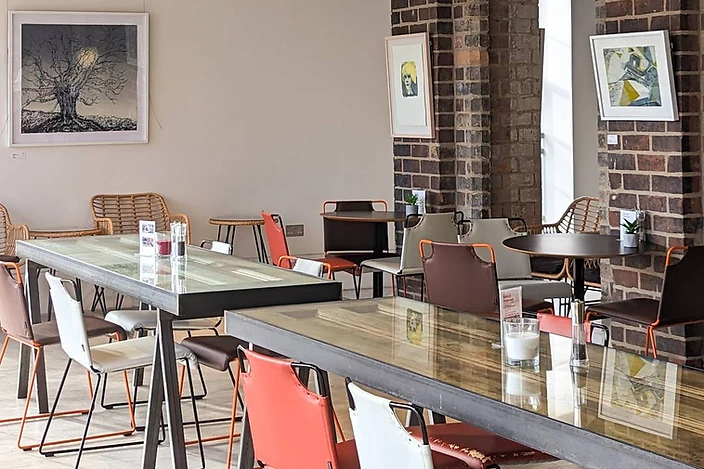
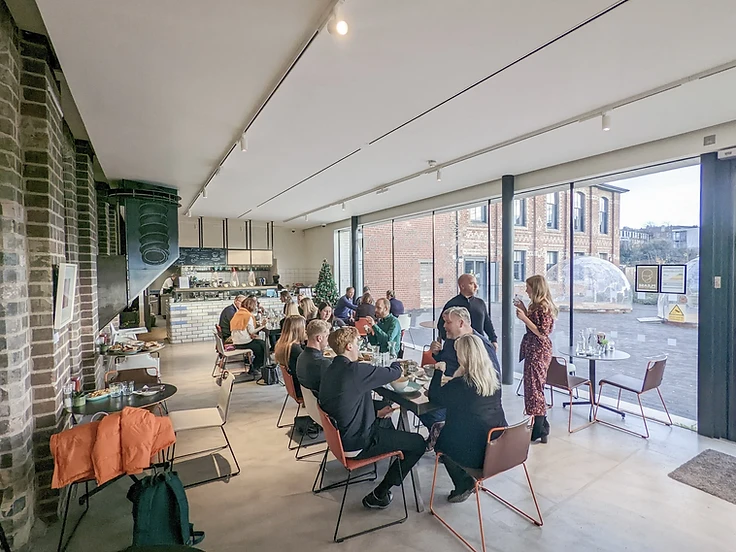
KUBA lives inside Castle Mills on Dundee Street, home of Edinburgh Printmakers - the UK's oldest open-access print studio, in a restored 19th-century rubber mill in Fountainbridge. Galleries, presses, workshops and a café, all in one building.
We share more with printmakers than a postcode. Both crafts are about repetition and variation, layering and knowing when something is finished. Kuba cloth and Scottish tartan reflect a shared appreciation of pattern as identity - expressed through different materials, traditions and histories.
Hospitality
We want a room where a printmaker on a break, a family on a Sunday, a table of colleagues and someone eating alone with a book all feel equally expected. Ask us where a dish comes from - that conversation is the point.

Africa × Scotland
Food, Pattern and Culture
Across cultures, patterns tell stories about identity, place and tradition. From the geometric designs of Kuba textiles to the familiar lines of Scottish tartan, they reflect the creativity and craftsmanship of the people who make them.
At KUBA, we draw inspiration from this connection between food, art and culture. Our kitchen brings its own creative approach to ingredients, flavours and presentation, while our home at Edinburgh Printmakers places us within a community of artists and makers.
Keep exploring